Case Study: Trimac Transportation

Preventative Approach Avoids Toxics Use and Yields Net Savings of $225,000 per Year with a Payback of 5 Months.


The Challenge

Trimac used 24 tonnes/year of a toxic and carcinogenic solvent (methylene chloride) to remove residual paint and adhesive from totes used by car manufacturers, which posed health and safety risks to workers and required annual reporting to the National Pollutant Release Inventory (NPRI).

The Solution

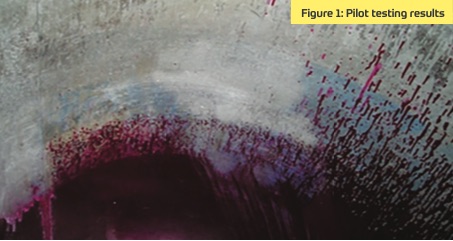
Enviro-Stewards identified and implemented an alternative process for removing residual paint using soda blasting (shown in top photo) which was superior to the existing solvent-based process.

In addition, this solution:

  • Ended staff exposure to a carcinogenic solvent
  • Eliminated the need to report under government regulations

All identified opportunities for the site would reduce:

  • Toxics by 24 tonnes/year
  • Subject wastes by 68 tonnes/year
  • Hazardous wastes by 55 tonnes/year
  • Water by 810 tonnes/year
  • Greenhouse Gas emissions by 2 tonnes/year

Enviro-Stewards Case Study: Trimac Transportation, Figure 1

Figure 1: Pilot testing results: A proof-of-concept trial demonstrated that the new process removed residual paint (blue) left behind by the solvent-based process.
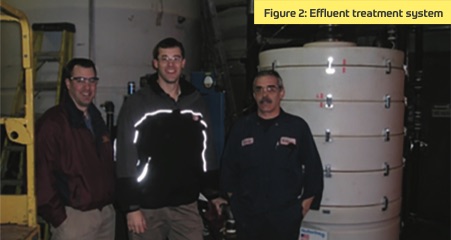
Enviro-Stewards Case Study: Trimac Transportation, Figure 2

Figure 2: Effluent treatment system:The new process eliminated emissions by 99%. Enviro-Stewards then designed & commissioned an effluent treatment system to treat the remaining 1%.

Let’s discuss your corporate sustainability, 
and how we can help.